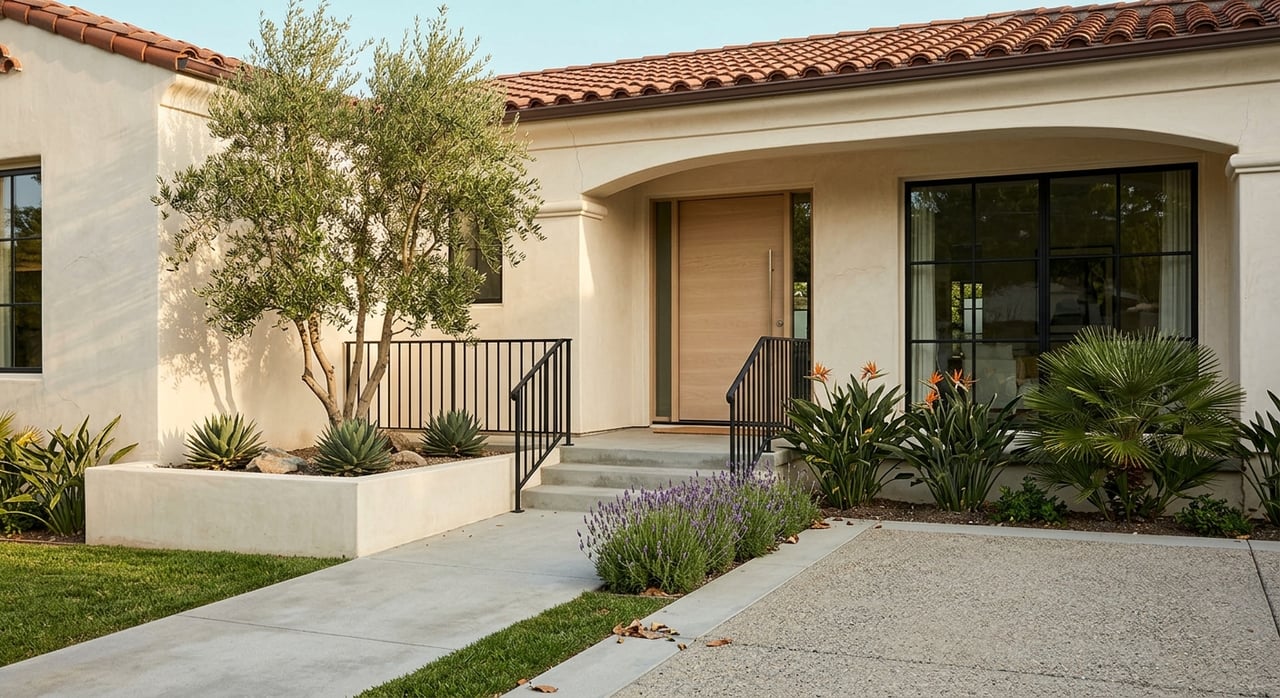
Wondering whether Fullerton’s older neighborhoods or newer communities fit you better? It is a smart question, because in Fullerton, “established” and “newer” can mean very different home styles, ownership rules, and day-to-day routines. If you are trying to balance character, convenience, flexibility, and long-term fit, this guide will help you compare the trade-offs with more confidence. Let’s dive in.
Fullerton has three main housing patterns
When buyers compare areas in Fullerton, they are usually choosing between three broad housing eras. The first is the established or historic core tied to the original townsite and the city’s 1920s growth. The second is the postwar layer of ranch and mid-century tracts, and the third is newer master-planned or infill communities.
That matters because each era tends to come with its own look, lot setup, ownership structure, and review standards. Fullerton also actively protects historic neighborhoods through Residential Preservation Zones while allowing compact infill and smaller-lot subdivision in appropriate places. In other words, the city’s housing choices are varied by design, not by accident.
Established areas offer character and history
If you are drawn to homes with architectural variety and a stronger sense of place, Fullerton’s established areas often stand out first. The city’s heritage survey ties older housing stock to styles such as Colonial Revival, late Victorian, Mission Revival, Craftsman, California bungalow, Spanish Colonial Revival, cottage, Minimal Traditional, and later ranch. That gives many older areas a layered feel rather than one single visual theme.
These neighborhoods are also not all the same size or shape. Fullerton recognizes 18 Landmark Districts, and the heritage survey identifies 20 historic neighborhoods or districts overall. Some include only a handful of homes, while others span many blocks and hundreds of residences.
Skyline Park is one local example of how specific these areas can be. The city describes it as a late-1920s rectangular subdivision with 114 lots. That kind of detail reminds you that each historic area has its own pattern, scale, and identity.
Mid-century tracts can offer a useful middle ground
If you like the idea of an established neighborhood but do not need a historic-district feel, Fullerton’s postwar tracts may be worth a close look. The city’s survey says ranch housing became the dominant tract style from the late 1930s through 1975. That makes mid-century neighborhoods a major part of Fullerton’s housing landscape.
For many buyers, these areas hit a practical sweet spot. You may find a more consistent neighborhood layout than in the historic core, but still get an older-home setting rather than a brand-new planned community. They can appeal to buyers who want room to personalize a home over time while staying in an established part of the city.
Fullerton Groves is a strong local example. The survey identifies it as a postwar Historic District with 286 residences built between 1953 and 1956. That gives you a sense of how important postwar housing is to the city’s identity.
Newer communities bring predictability and amenities
Newer Fullerton housing is usually either master-planned or infill-based. These areas often attract buyers who want a more predictable ownership experience, a more uniform neighborhood design, or amenities built into the community structure. In many cases, that can mean easier expectations around maintenance standards, parking rules, and shared spaces.
The city’s PRD-I zone is intended for vacant or underutilized sites within existing neighborhoods and is designed to support compact development and smaller-lot subdivisions. Fullerton also notes that specific plans can supersede original zoning, which is important because newer projects often operate under their own development standards. That can affect how the community looks and how future changes are handled.
Amerige Heights is one of the best-known examples of a newer planned area in Fullerton. It was built on a former Hughes defense-research site and is described by the community as a walkable neighborhood with parks, local shops, civic and community buildings, and recreation facilities. For buyers who value a planned environment, that can be a strong draw.
Architecture and lot size are not one-size-fits-all
One of the biggest mistakes buyers make is assuming older means larger lots or newer means smaller ones every time. In Fullerton, lot size is best treated as a property-specific question. The city says its GoZone tool includes lot size and other parcel information, so it is important to verify the exact parcel instead of relying on a neighborhood label.
That said, the city’s housing framework does give you some general guidance. Older blocks may contrast with newer compact developments, especially where PRD-I zoning supports smaller-lot subdivision. So while trends exist, the actual parcel should always lead the conversation.
Architecturally, established areas usually offer the broadest mix. Newer communities often feel more consistent from one street to the next. Neither is automatically better. It comes down to whether you want a home that feels distinct and layered or one that feels more standardized and easier to predict.
Remodeling rules can differ a lot
If you are already thinking about adding space, reworking the exterior, or building an ADU, this is one of the most important parts of your search. In older preservation-zoned areas, Fullerton allows some additions and accessory dwelling units, but projects must maintain the traditional character of the area and go through design guidelines and review. The city also says some preservation zones do not allow two-unit housing development or urban lot splits.
That means an older home may offer charm and centrality, but not total freedom to change the exterior however you want. For some buyers, that is a fair trade to preserve neighborhood character. For others, it may feel too restrictive.
Newer communities can have a different kind of limitation. Instead of city preservation review, you may be dealing with HOA rules, community standards, and specific plan requirements. The rules are different, but the need to review them carefully is the same.
Commute and convenience can shape your choice
Your daily routine can be the deciding factor between an established area and a newer one. Fullerton’s Transportation Center is a major local advantage, especially for buyers who want rail access. The city says about 3,000 commuters pass through the Transportation Center on a typical workday, making it the busiest stop on Metrolink’s Orange County route, with connections to Amtrak and OCTA.
Because that hub is downtown, homes closer to central Fullerton often offer the shortest trip to transit, dining, and other downtown amenities. If walkability to the urban core or easier train access matters to you, the older townsite and central neighborhoods may rise to the top of your list.
Newer communities often offer a different type of convenience. Amerige Heights, for example, is described as walkable within the community and includes parks, local shops, and recreation facilities. Lennar’s Pineridge community is described as having easy access to downtown Fullerton through interconnected trails and being close to shopping and dining.
HOA structure is often the big dividing line
For many buyers, the real choice is not old versus new. It is review-based city oversight versus HOA-based community oversight. That distinction can shape your monthly costs, your paperwork, and your day-to-day ownership experience.
In newer common-interest developments, HOA structure is often part of the package. Amerige Heights shows how involved that can be, with amenities, a clubhouse, patrol service, a resident portal, traffic and parking rules, and multiple sub-associations. Ownership there includes not just the home, but the governing framework around it.
California’s Department of Real Estate advises buyers in common-interest developments to treat the CC&Rs as binding ownership documents. Its buyer guide says the public report for a new subdivision includes information on HOA matters, common area, assessments, taxes, and other material disclosures. In plain terms, if you are buying in a newer planned community, the documents matter just as much as the floor plan.
Older historic or preservation-zoned neighborhoods often flip that equation. You may have fewer HOA-style rules, but more city-level review for exterior work. Fullerton’s preservation program is designed to keep additions and new construction in line with neighborhood character.
How to choose the right fit
If you want character, layered architecture, and easier access to downtown and rail, established areas may be the best match. If you want a middle ground with established streetscapes and practical renovation potential, postwar tracts can be very appealing. If you want predictability, shared amenities, and a more structured ownership model, newer communities may fit better.
A smart short list starts with your real priorities. Ask yourself whether you care more about charm or consistency, centrality or planned amenities, and fewer HOA rules or fewer design surprises. Those answers usually narrow the field quickly.
Before you write an offer, there are three checks that can save you time and stress:
- Verify the exact parcel lot size in GoZone.
- Confirm whether the home is in a preservation zone or specific plan area.
- Review the HOA CC&Rs, budget, and disclosure packet if the property is in a common-interest development.
Those three steps can help you separate a home that looks great online from one that truly fits your lifestyle and budget.
Fullerton gives you more variety than many buyers expect, and that is part of its appeal. The key is not choosing the “best” area in the abstract. It is choosing the part of Fullerton that best matches how you want to live, commute, maintain, and plan for the future.
If you want help comparing specific Fullerton neighborhoods, reviewing property-level trade-offs, or narrowing your search with local insight, Stephanie Rezac can help you make a confident move.
FAQs
What makes Fullerton’s established areas different from newer communities?
- Established areas usually offer more architectural variety, older street patterns, and in some cases closer access to downtown and the Transportation Center, while newer communities often offer more predictable design standards, HOA structure, and planned amenities.
Are lot sizes larger in older Fullerton neighborhoods?
- Not always. Fullerton advises buyers to verify the exact parcel in the city’s GoZone tool because lot size is a property-specific question rather than something you should assume based on neighborhood age.
Do historic areas in Fullerton allow remodeling or ADUs?
- Some do, but projects in preservation-zoned areas must maintain the traditional character of the neighborhood and go through design review, and some preservation zones do not allow two-unit development or urban lot splits.
What should buyers know about HOAs in newer Fullerton communities?
- In common-interest developments, buyers should review the CC&Rs, assessments, budgets, and disclosure materials carefully because those documents help define the ownership experience, monthly costs, and community rules.
Is downtown Fullerton more convenient for commuting?
- For many buyers, yes. The Fullerton Transportation Center is downtown and serves as the busiest stop on Metrolink’s Orange County route, with connections to Amtrak and OCTA, so central locations may offer easier rail access.
What is the best way to compare homes in different parts of Fullerton?
- A practical approach is to compare each property by parcel size, zoning or preservation status, HOA structure if applicable, and how well the location fits your daily routine, especially for commuting and nearby amenities.